Portuguese woman investigates carbon in the ArcticPhoto by Aimbere Elorza on Pexels
Science

Portuguese woman investigates carbon in the Arctic

Observador26 August 2026 at 18:10

A Portuguese scientific expedition leaves Iceland on August 2 and arrives in Norway on September 3, with the objective of investigating the role of calcifying plankton in carbon transport in the Arctic. The research is led by Catarina Guerreiro, from the Faculty of Sciences of the University of Lisbon (FCUL), and aims to understand how these marine organisms contribute to the carbon cycle in Arctic waters.

Related articles

Science

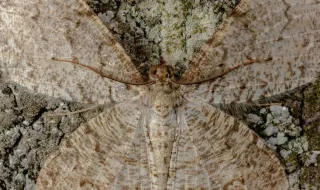
One of the largest nocturnal butterflies in Europe confirmed for the first time in Portugal

The oleander hawk-moth (Daphnis nerii), one of the largest nocturnal butterflies in Europe, was confirmed for the first time in Portugal in a scientific article published in the journal Zoodiversity by entomologists Eduardo Marabuto and Albano Soares. Five records of the species were documented between 2014 and 2024, including the first evidence of reproduction in the country, discovered in Montijo when researchers found pupae under an oleander tree. This westward expansion, likely driven by climate change, has also been observed in other European countries such as Germany, Hungary, France and Belgium. Although there is still no evidence of resident populations in Portugal, experts believe the species may eventually establish itself in the country, becoming a flagship species for raising awareness about butterflies and biodiversity.

Wilder27/08/26, 19:02
Science

Today it's worth waking up early to see the Moon plunge into the Earth's shadow. Find out where to watch the eclipse (including online)

The last partial lunar eclipse of the year offers a spectacle for early risers, with the Moon plunging into Earth's shadow during the early morning hours. For those unable to observe the phenomenon directly, various online broadcasts will be available to follow the celestial event.

SAPO Tek27/08/26, 18:50
É noite de eclipse lunar; não, não é um monstro vingativo a comer a Lua
Science

It is a lunar eclipse night; no, it is not a vengeful monster eating the Moon

A partial lunar eclipse, with a maximum of 83%, will be visible in Portugal in the early morning between approximately 2:30 AM and 7:10 AM, with the "peak" expected to be around 5:10 AM. The article debunks seven myths associated with this astronomical phenomenon, including the belief that it is a sign of bad omen, theories related to pregnancy and babies, and the story of a jaguar. Unlike a solar eclipse, a lunar eclipse does not require special glasses to be observed, as it results from the Earth passing between the Sun and the Moon, rather than the Moon passing between the Earth and the Sun.

ZAP Notícias27/08/26, 18:30
Science

Rocks can store enough energy to power cities

Portuguese researchers from the GeoBioTec center at Nova University of Lisbon and the Dom Luiz Institute concluded, through theoretical models, that energy storage in porous rocks located at depth can reach capacities sufficient to supply a small city. This discovery represents a significant advance in the field of renewable energies and geological energy storage.

Notícias Lx27/08/26, 18:23