The dinosaur that lived in Castellón and survived a serious infection 125 million years ago: it is the first known case
ScienceVila Real

The dinosaur that lived in Castellón and survived a serious infection 125 million years ago: it is the first known case

El Periódico Mediterráneo - General26 August 2026 at 15:07

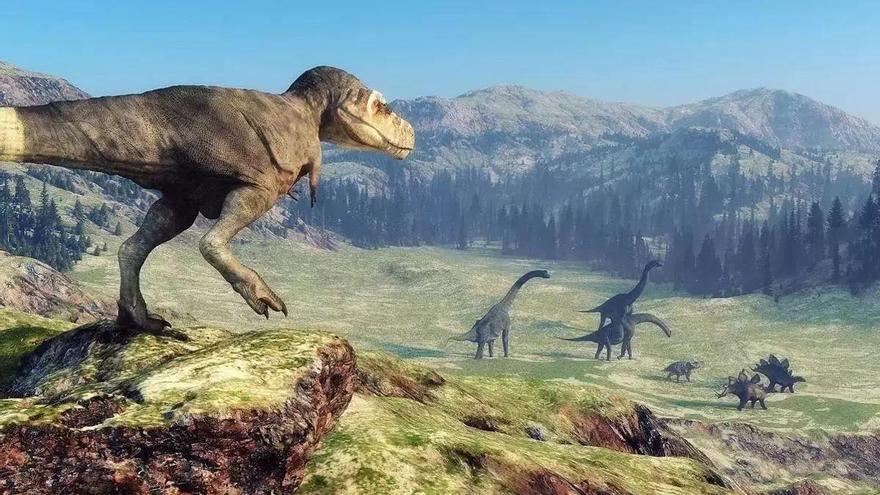
A dinosaur fossil discovered in Morella, one of the great paleontological enclaves of the European Lower Cretaceous, in the province of Castellón, has revealed itself to be the first known case of a dinosaur that survived a severe infection 125 million years ago. The discovery demonstrates that dinosaurs also got sick, suffered infections, and were able to live with serious injuries for a time, offering new perspectives on the biology and resilience of these prehistoric animals.

Related articles
Science

Giant battery to store renewable energy is under our feet</minimax:tool_call>:

Portuguese researchers from the GeoBioTec (FCT-NOVA) and Dom Luiz Institute (FCUL) centers discovered that underground porous rock formations can function as a "giant battery" to store renewable energy on a large scale, powerful enough to supply an entire city.

RTP Notícias27/08/26, 18:10
Science

Eyes on the sky: last partial lunar eclipse of the year happens this early morning

Portugal may observe in the early morning of this Friday, August 28, the last partial lunar eclipse of the year. The phenomenon, which occurs when the Moon partially crosses the shadow projected by Earth, will begin at 2:23 AM with the entry into Earth's penumbra, and the most visible partial phase will begin at 4:12 AM. Earth's shadow will cover part of the lunar surface, altering the appearance of the lunar disk, with the peak of the eclipse occurring near sunrise.

Rádio Campanário27/08/26, 17:49
Science

How climate change can help explain the disaster in Nepal</minimax:tool_call> output: How climate change can help explain the disaster in Nepal

Filipe Lisboa, climate change specialist, analyzed the disaster that occurred in China and Nepal, which has already caused more than 390 dead and 1,400 missing, linking the event to climate change.

CNN Portugal27/08/26, 17:42
Science

At Monte Molião, in Lagos, the doors opened to a past that is discovered little by little

The archaeological site of Monte Molião, in Lagos, is a location with traces of occupation from the Iron Age (4th century BC) to the Roman-Imperial period (1st-2nd centuries AD), which has been investigated since 2006 through a collaboration between the Lagos Municipal Council, the Faculty of Letters and UNIARQ at the University of Lisbon. The project, directed by Professor Ana Margarida Arruda and currently by researcher Elisa Sousa, revealed well-preserved urban planning, with three organized sectors, a Roman cistern and traces of various activities such as metallurgy, pottery and grain processing. Interdisciplinary studies, including malacological fauna analysis, indicate possible environmental changes and high-energy events that affected the landscape over the centuries. The project also includes a strong pedagogical component, having trained approximately 250 to 300 archaeology students, and envisions the enhancement of the site with the creation of a visit route and the future exhibition of pieces at the Museum of Lagos.

Jornal do Algarve27/08/26, 17:33