54% of Brazilians who smoke or have smoked tried to quit cigarettes, new study showsPhoto by Mak Cézar on Pexels
ScienceCoimbra

54% of Brazilians who smoke or have smoked tried to quit cigarettes, new study shows

oglobo29 August 2026 at 04:01

An unprecedented survey reveals that 54.1% of Brazilians who smoke or have smoked tried to quit cigarettes in recent years, but only 13.4% had access to some type of treatment to quit the habit. The study, obtained exclusively by GLOBO, was released on National Tobacco Control Day.

The survey also shows that ex-smokers already represent 18.3% of the Brazilian adult population, a percentage higher than that of current smokers, who correspond to 11.3% of the population. Meanwhile, 70% of Brazilians declared they have never smoked.

The data is part of the technical note "More Data More Health – Perceptions of the Brazilian population on risk factors for cancer," produced by Umane and Vital Strategies, with support from Instituto Devive.

Related articles

Medicamento para o cancro do pâncreas a caminho
Science

Medicine for pancreatic cancer on its way

A new drug for pancreatic cancer has been approved in the United States, with Europe preparing to follow the same path. The treatment costs around 34,000 euros per month and has been shown to double patients' survival rate, representing a significant breakthrough in the treatment of this often fatal disease.

Correio da Manhã29/08/26, 01:30
Science

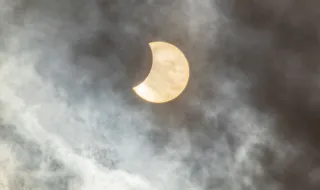
After the Sun, it's the Moon's turn. Partial lunar eclipse visible in Portugal last night

In the early morning of August 28, Portugal was the stage for a partial lunar eclipse, which reached its peak at 5:13 AM with 96.3% occultation of the Moon by Earth's shadow. The phenomenon, visible to the naked eye across Europe, West Africa and the Americas, tinted the satellite with a reddish hue — resulting from red light passing through Earth's atmosphere when the Moon entered the penumbra. Unlike the total solar eclipse of August 12, no protective equipment was needed, and the Moon remained visible, though lower on the horizon, facing west-southwest. Physicist Alexandre Cabral explained that Earth's atmosphere acts as a filter, scattering blue light and letting red pass through, which explains the characteristic coloring of the "Blood Moon," although less intense since it was a partial eclipse.

O Cascalense29/08/26, 01:05
Como serão os seres humanos no futuro?
Science

What will humans look like in the future?

The article explores whether humans continue to evolve and what they might look like in the future, considering issues about height, physical characteristics, and genetic design. Although modern medicine, hygiene, and easy access to food have reduced many of the pressures from natural selection that shaped the human species, such as diseases and hunger, anthropologist and evolutionary geneticist Jason Hodgson, from Anglia Ruskin University in the United Kingdom, states that evolution "undoubtedly" continues to happen today.

ZAP Notícias28/08/26, 23:30
Trump condecora astronautas da Artemis II com a mais alta distinção espacial dos EUA
Science

Trump decorates Artemis II astronauts with the highest US space distinction

President Donald Trump on Friday presented the Congressional Gold Medal to the four astronauts of the Artemis II mission, three Americans and one Canadian, who became the first humans to travel to the Moon in over 50 years.

Correio da Manhã28/08/26, 23:25