The countries surrounding the Baltic Sea will create a joint force for drone defense, in an attempt to respond more quickly to the growing threat of hybrid attacks and airspace incursions in the region. The initiative, presented by Germany, aims to facilitate rapid information exchange between countries and enable a coordinated response to new threats.
The Baltic Sea is surrounded by eight NATO countries and Russia, and since the large-scale invasion of Ukraine in 2022, several incidents of possible sabotage involving submarine cables and critical infrastructure, including gas pipelines, have been recorded. German Interior Minister Alexander Dobrindt met with his counterparts from Denmark, Estonia, Finland, Latvia, Lithuania, Poland, Sweden, Norway, and Ireland to discuss the current threat perception in the region.
Germany is particularly on alert after a drone with explosives was found earlier this month at Leipzig/Halle airport, one of Europe's largest air cargo centers and an important logistics base for NATO operations with military transports to Ukraine. Dobrindt warned that "foreign powers try daily to attack and undermine democracy, security, and economic strength within the European Union," considering the hybrid threat to be "omnipresent" and that it could "assume a new dimension in the coming months."
German authorities have not publicly accused any country over the incident, although some lawmakers have pointed fingers at Russia, which rejected the accusations and classified the case as a "manufactured provocation." The new joint force aims to strengthen the Baltic countries' capacity to detect, share information, and respond quickly to potential drone attacks and other forms of hybrid warfare.
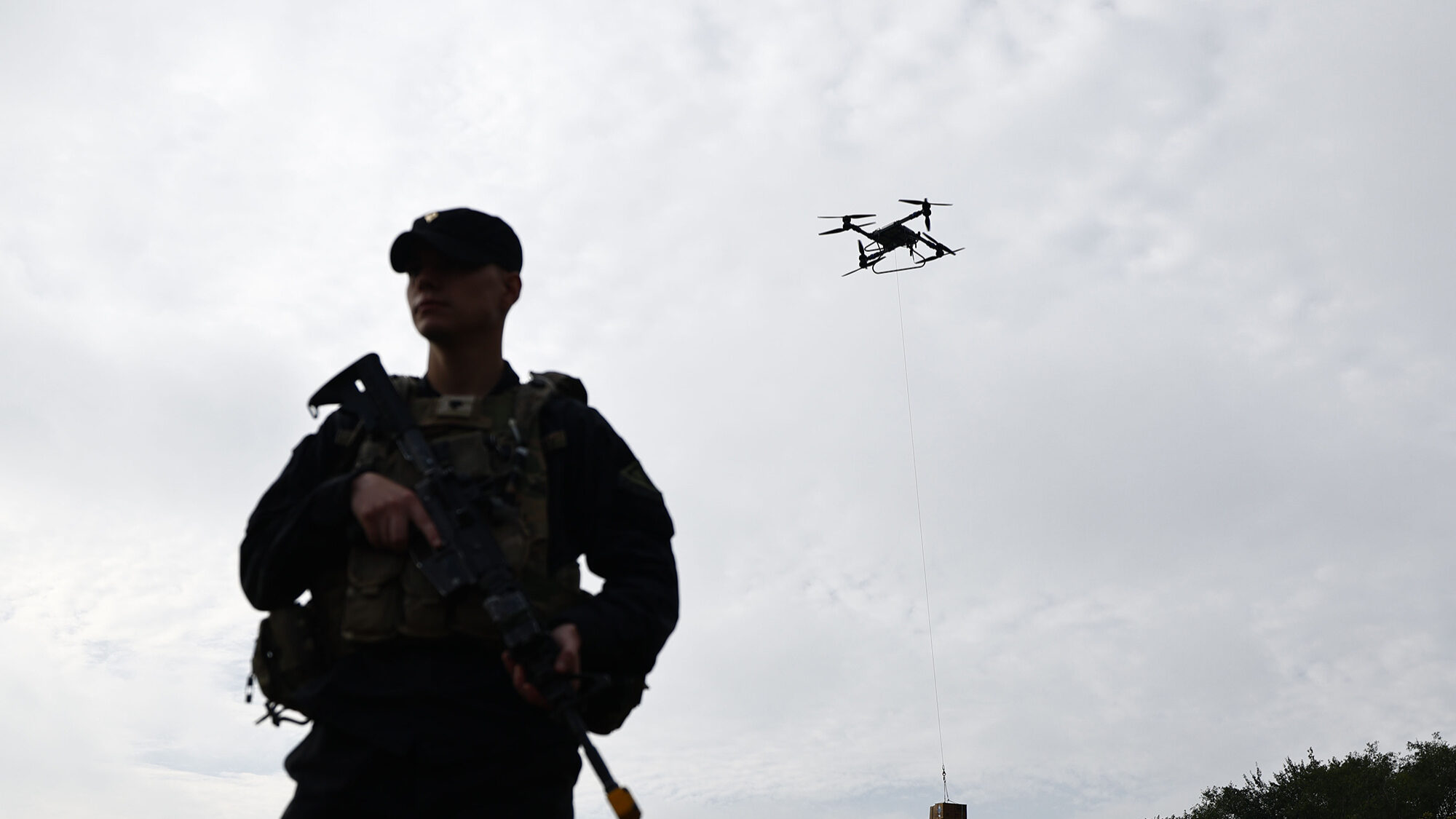
Os países que rodeiam o Mar Báltico vão criar uma força conjunta para a defesa contra drones, numa tentativa de responder mais rapidamente à crescente ameaça de ataques híbridos e incursões no espaço aéreo da região. A iniciativa pretende facilitar a troca rápida de informação entre os países e permitir uma resposta coordenada perante novas ameaças.
O Mar Báltico é rodeado por oito países da NATO e pela Rússia e tem registado, desde a invasão em larga escala da Ucrânia em 2022, vários incidentes de possível sabotagem envolvendo cabos submarinos e infraestruturas críticas, incluindo gasodutos.
Novo drone com explosivos detetado junto a aeroporto alemão
Ler Mais
“Potências estrangeiras tentam diariamente atacar e minar a democracia, a segurança e a força económica dentro da União Europeia”, destacou o ministro do Interior alemão em comunicado, citado pela Reuters. Alexander Dobrindt avisou ainda que estes ataques podem “assumir uma nova dimensão nos próximos meses” e que a ameaça híbrida é “omnipresente”.
O ministro da Alemanha reuniu com os seus homólogos da Dinamarca, Estónia, Finlândia, Letónia, Lituânia, Polónia, Suécia, Noruega e Irlanda para debater a atual perceção de ameaça no Mar Báltico e arredores.
A Alemanha está particularmente em alerta para a ameaça dos drones depois de, no início deste mês, ter sido encontrado no aeroporto de Leipzig/Halle um drone que transportava explosivos e, também em agosto, a descoberta de um novo drone.
O aeroporto de Leipzig é um dos maiores centros europeus de carga aérea e uma importante base logística para operações da NATO com transportes militares para a Ucrânia, aumentando a relevância do incidente para além da segurança civil e do funcionamento do aeroporto.
Alemanha investiga ligação de Estado a drone com explosivos
Ler Mais
As autoridades alemãs não acusaram publicamente nenhum país pelo incidente. Alguns deputados apontaram, contudo, o dedo à Rússia, que rejeitou as acusações e classificou o caso como uma “provocação fabricada”.
A criação da força conjunta, apresentada por Berlim, surge assim como uma tentativa de reforçar a capacidade dos países do Báltico para detetar, partilhar informação e reagir rapidamente a potenciais ataques com drones e outras formas de guerra híbrida.