From 30 to over 80 years: how medicine doubled human life expectancy
Science

From 30 to over 80 years: how medicine doubled human life expectancy

SAPO Notícias27 August 2026 at 15:00

The article explores how medicine managed to double human life expectancy, going from approximately 30 years to over 80 years over the past few centuries. Although there are people who attribute longevity to luck and reject medical advances such as vaccines and treatments, history demonstrates that we have never lived as long as we do today, this achievement being a direct result of progress in the field of health and medical science.

Related articles

Science

Vale a pena madrugar para ver a Lua mergulhar na sombra da Terra. Saiba onde acompanhar o eclipse (incluindo online)

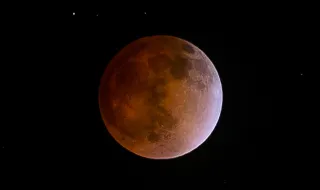
The last partial lunar eclipse of the year offers today an unmissable opportunity for early risers to observe the Moon plunge into Earth's shadow, in a phenomenon that promises to be a spectacle in the night sky. For those who cannot wake up during the early morning hours or don't have the conditions to see the event directly, several online broadcasts are available that allow following the eclipse from anywhere.

SAPO Tek27/08/26, 18:50
É noite de eclipse lunar; não, não é um monstro vingativo a comer a Lua
Science

It's a lunar eclipse night; no, it's not a vengeful monster devouring the Moon

Days after the largest solar eclipse of the century in Portugal, it is now the turn of a lunar eclipse, although not total in the country, reaching a maximum of 83%. The article debunks seven popular myths about lunar eclipses, including the belief that they are signs of bad omens, unfounded theories about effects on pregnancy and babies, and the legend of a mythological jaguar. It explains that a lunar eclipse occurs when the Earth positions itself between the Sun and the Moon, and unlike a solar eclipse, it can be observed with the naked eye. The phenomenon will be visible in Portugal between 2:30 AM and 7:10 AM, with its peak around 5:10 AM.

ZAP Notícias27/08/26, 18:30
Science

Rocks can store enough energy to power cities

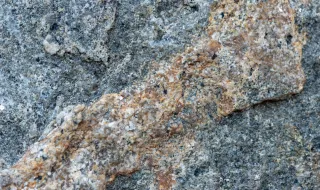
Portuguese researchers from the GeoBioTec center at Nova University of Lisbon and the Dom Luiz Institute concluded, through theoretical models, that energy storage in porous rocks located at depth can reach capacities sufficient to supply a small city. This discovery represents a significant advance in the field of renewable energies and geological energy storage.

Notícias Lx27/08/26, 18:23
Science

Dr. Andrea Melo explains study that associates daily bruxism to chronic migraine

Dentist Andréa Melo explains a groundbreaking Brazilian research conducted by the Headache Center Brasil, presented at the 22nd Congress of the International Headache Society, which identified a high prevalence of awake bruxism in patients with chronic migraine. The study, conducted using surface electromyography, showed that both conditions share the same neurological mechanism: hyperactivation of the trigeminal nerve, which runs through the facial muscles. Melo's clinical observation, which she has noted for years in patients referred by neurologists, now has scientific backing.

oglobo27/08/26, 18:10